Guard Services
Byers K9 Services
Nationwide Security Guard & K9 Patrol Services
Guard services are bought on price and judged on incidents. The gap between those two is where most contracts go wrong — an officer who is undertrained, unsupervised, or working without the license the job requires. Byers K9 Services provides guard and K9 patrol coverage nationwide, and we would rather talk about post orders and licensing than about hourly rate.
Presence Is the Product
Almost everything a guard program achieves, it achieves before anything happens. A marked vehicle on an irregular patrol pattern, an officer who is visibly paying attention, a dog at the end of a leash — these change behavior at the point where someone is still deciding. Incident response matters, but it is the smaller half of the job. A program that only proves its value when something goes wrong is a program that has already failed twice.
Coverage Models
Most sites need a combination rather than one thing. Start with the risk and the hours, not the job title.
K9 Patrol Units
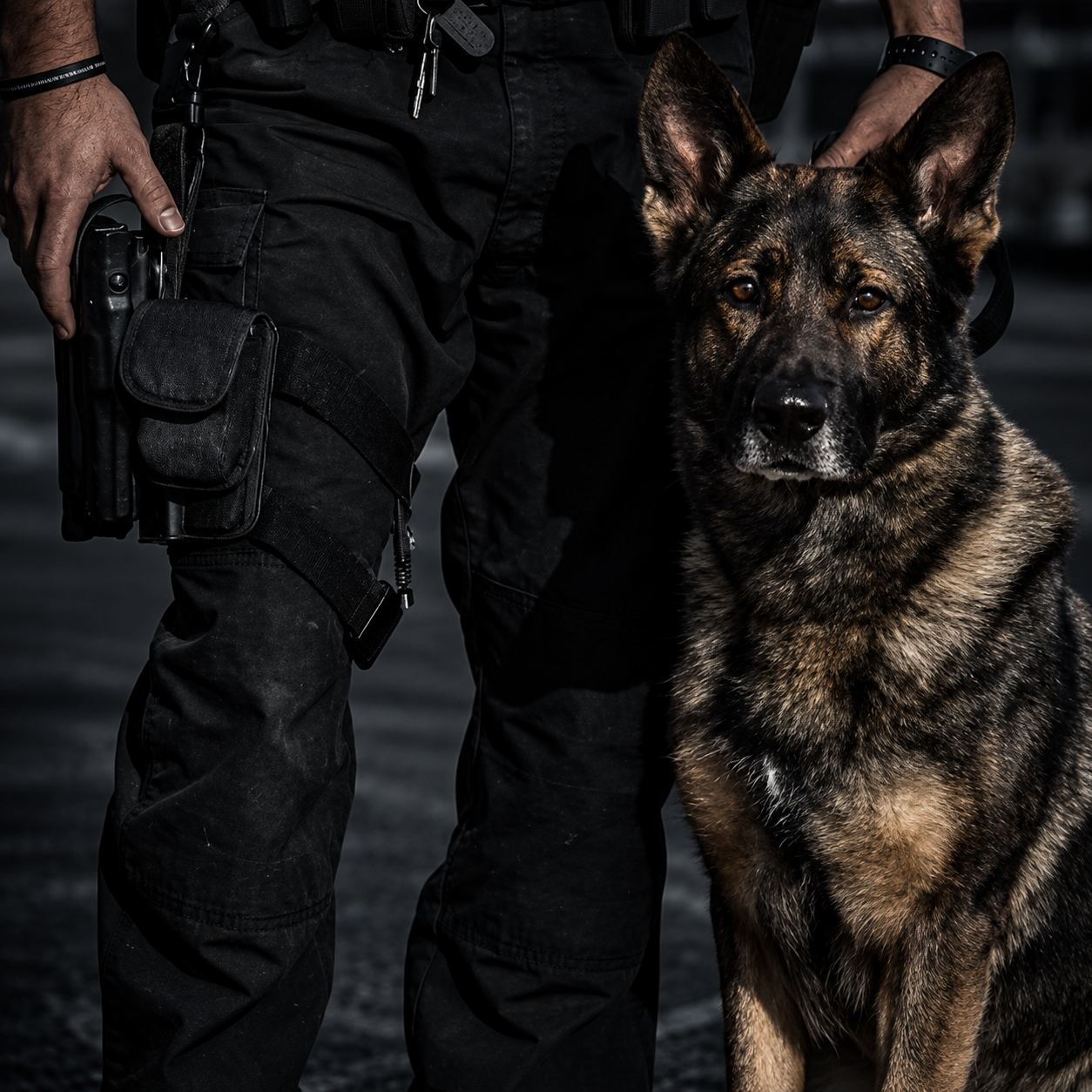
Handler-and-dog teams on irregular patrol patterns. The most visible deterrent we field, and the right answer for large lots, yards, construction sites and campuses after hours.
Security Guards
Standing posts and staffed coverage for lobbies, gates, events and access control, working to written post orders rather than improvisation.
Parking Enforcement
Permit checks, violation documentation and lot management for properties where parking is the daily friction point.
Surveillance & Monitoring
Camera coverage and monitoring that extends a guard program past the hours you can afford to staff it.
Detection Support
Explosives, firearms and narcotics detection teams that work alongside a guard program for events, sweeps and threat response.
Additional Services
Fire watch, alarm response, termination standby, loss prevention and executive protection — the coverage that does not fit neatly into the categories above.
What a K9 Patrol Adds — and What It Doesn’t
What it adds
Deterrence that works at a distance. People change course when they see a dog, well before an officer would have to say anything.
Coverage of ground a camera cannot see — between buildings, behind equipment, in stairwells and along fence lines.
A faster read on whether a large, dark space is actually empty.
De-escalation. Situations that would otherwise become physical often end at the sight of the dog.
What it does not do
Make our officers law enforcement. We are not police, we do not make arrests, and we do not conduct criminal investigations.
Replace lighting, locks, access control or cameras. A patrol team compensates for weak physical security; it does not fix it.
Suit every environment. In some settings a dog raises tension rather than lowering it, and we will say so.
Substitute for enough hours. One patrol pass a night on a large site is a deterrent story, not a security program.
How a Guard Program Gets Built
Walk the site and name the risk
Access points, sightlines, lighting, blind corners, when incidents actually happen and what has already gone wrong. Coverage hours should follow the risk, not a round number on a quote.
Write the post orders
Exactly what the officer does, what they do not do, who they call, and in what order. Post orders are what separate a security program from a person in a jacket. You approve them before anyone starts.
Staff it and license it
Officers assigned to your site, licensed for the work they are doing, with the credentials documented to you rather than described. Consistency matters here — a rotating cast of strangers never learns your site.
Patrol unpredictably
A patrol on a fixed schedule teaches people exactly when the site is unwatched. Patterns get varied deliberately, and checkpoints are logged so you can see that the rounds actually happened.
Report and adjust
Shift reports, incident reports and patrol logs you actually receive and read. If three months of reports show nothing happening in a given window, that window should be re-priced or reassigned — not quietly billed forever.
How to Vet Any Guard Company
Private security licensing varies enormously from state to state, and in some places it barely exists. Colorado, for instance, still has no statewide licensing scheme — a 2025 bill to create one died in committee — while other states license every officer and every company. Whatever the rules are where your site sits, these five questions are worth asking of us and of anyone else bidding.
1. Employer registration
Where a state or city licenses security companies, the company needs its own registration separate from any individual license. Ask for it by number — and ask what applies in your jurisdiction.
2. Licensing of the actual officers
Not the company’s best-credentialed employee — the people who will be standing on your site. Licence types, training and renewal requirements differ from one jurisdiction to the next.
3. Weapon endorsements, if armed
Where armed work is regulated, carrying a firearm or non-lethal weapon usually requires a separate endorsement or permit on top of the basic licence. If someone is armed on your property without what your jurisdiction requires, that is your exposure too.
4. Insurance and who carries the risk
General liability, coverage limits and how the contract allocates liability for an incident. Read it before signing, not after.
5. Supervision and reporting
Who checks that patrols happened, how often, and what you receive in writing. Unsupervised overnight guard work is where contracts quietly stop being performed.
Ask us these too
We would rather answer all five in the first conversation than win a contract that falls apart at the first incident. Documentation on request.
Guard Services FAQs
Do I need a K9 patrol, or just a guard?
Are your officers licensed where our site is?
Do you provide armed guards?
Can your officers detain or arrest someone?
Are the patrol dogs safe around tenants and the public?
Can we start with short-term or overnight coverage?
What reporting do we get?
What areas do you serve?
How is guard coverage priced?
Request Guard or K9 Patrol Coverage
Tell us the site, the hours and what has actually been happening. We’ll tell you what coverage fits — and what it will honestly take.