Narcotics Unit
Byers K9 Services
Nationwide Narcotics Detection K9 Services
Byers K9 Services runs narcotics detection teams for schools, employers, property managers and treatment facilities nationwide — scheduled sweeps of lockers, common areas and parking lots, and targeted searches when something specific has been reported.
Where You Operate Changes the Question
In much of the country, hiring a narcotics K9 is a question of cost and scheduling. Anywhere cannabis is legal for adults, it starts with a different question: is the dog trained on marijuana? Colorado is the clearest illustration. Adults 21 and over have been able to possess small amounts legally there since 2012, and in 2019 the Colorado Supreme Court held in People v. McKnight that a sniff by a marijuana-trained dog is itself a search under the state constitution — because that dog cannot distinguish lawful marijuana from unlawful contraband. Other states have reached their own conclusions, and the rule where your site sits may differ. Any provider who does not raise this with you before quoting the job is not paying attention.
General information only, not legal advice. Talk to your own counsel about how this applies to your organization.
What Narcotics Detection K9s Are Trained to Find
A narcotics K9 is trained on a defined panel of target odors. Which odors are on that panel is a decision, not a given — and in Colorado it is the most consequential decision in the whole program.
Cocaine
Powder and crack cocaine, including residue on surfaces, currency and packaging.
Methamphetamine
Crystal and powder forms, plus the residue that persists in vehicles and storage after the product is gone.
Heroin & Opiates
Heroin and related opiate compounds in the quantities typically encountered in a school or workplace setting.
MDMA & Ecstasy
Pressed tablets and powder, frequently encountered around events and venues.
Marijuana & THC Concentrates
Flower, edibles and concentrates — and the odor a program in a legal-cannabis state may specifically want excluded. See the FAQs below.
Paraphernalia & Residue
Pipes, grinders, baggies and storage containers hold target odor long after the substance itself has been removed.
Because a dog alerts on odor rather than the object, it can indicate on a locker, a bag or a car that held a substance days earlier, with nothing there now. An alert tells you where to look. It is not a finding, and it is not proof.
Where Narcotics Detection K9 Teams Are Deployed
Most of this work is deterrence. A visible, predictable sweep program changes behavior long before it finds anything.
Schools & Districts
Lockers, classrooms and student parking on a recurring schedule. See our K9s For Students program.
Employers & Job Sites
Safety-sensitive workplaces, warehouses, yards and fleet vehicles, worked around your drug-free workplace policy.
Property & Multifamily
Common areas, stairwells, storage and garages, within the limits of your leases and your counsel’s guidance.
Treatment & Sober Living
Intake screening and scheduled room checks, run in a way that supports the program rather than undermining trust.
Events & Venues
Back-of-house, production areas and vendor access, alongside our security guards.
Vehicles & Logistics
Fleet screening, inbound freight and lot sweeps, alongside our patrol units.
Not sure where you fit? See the full list of industries we service.
How a Byers K9 Narcotics Sweep Works
Set the policy first
What gets searched, who is notified, what an alert triggers, and what is documented — agreed and written down before we arrive, and reviewed by your counsel. In a school or a workplace this is the part that determines whether the program holds up.
Sequence the areas
Lockers, common areas and vehicles are worked in an order that minimizes disruption and keeps a cleared area from being re-seeded behind the team.
The search
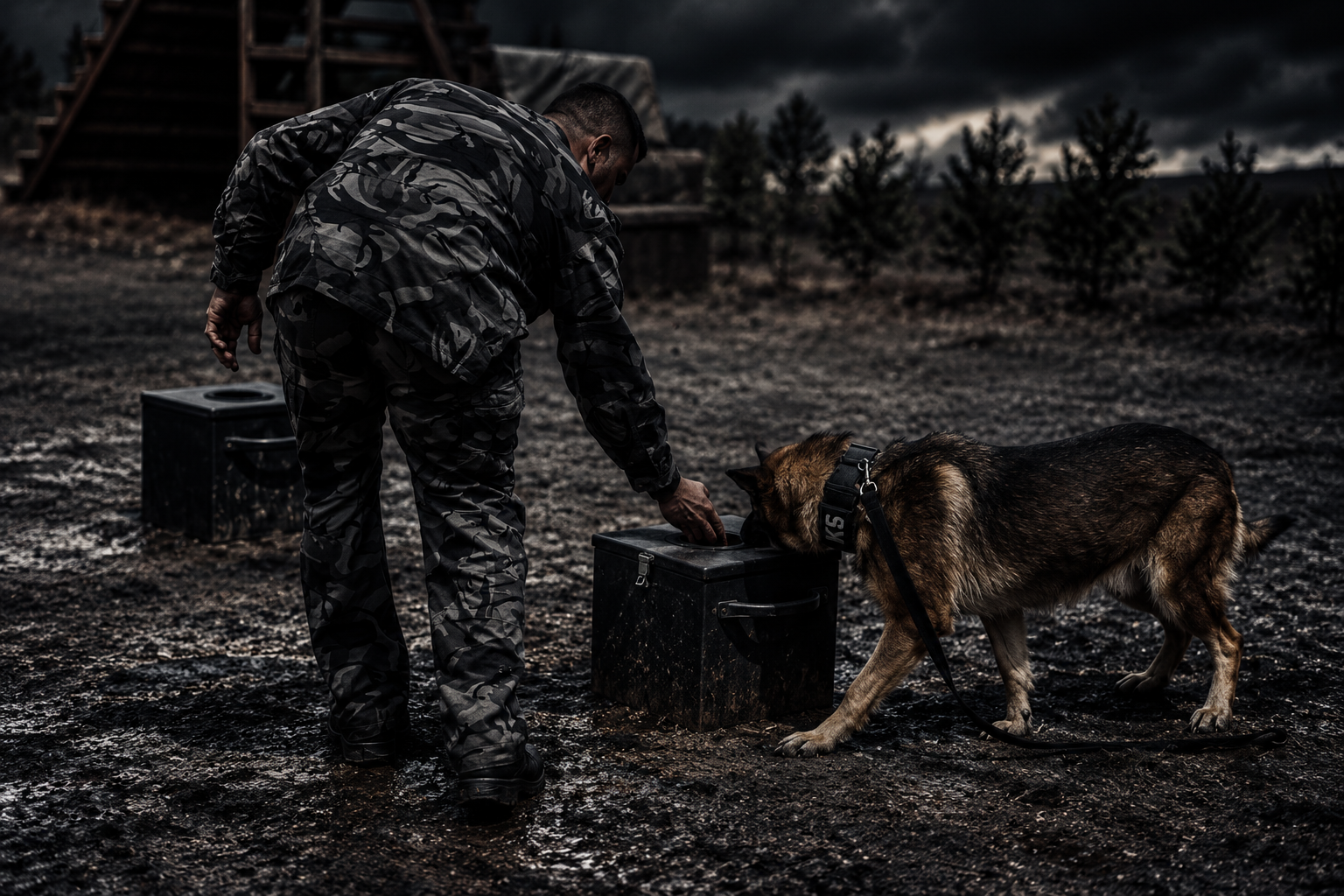
The handler works the K9 through each zone and reads the change in behavior. Our dogs use a passive alert — they sit or freeze on odor rather than scratching or pawing at a locker, a bag or a person.
Alert handling
We do not open lockers, bags or vehicles, and we do not question or detain anyone. On an alert we mark the location and hand off to your designated administrator or to law enforcement, exactly per the policy set in step one.
Documentation
A written report of areas covered, times, team identification, alerts and resolution. If a sweep is ever challenged, the report is what gets examined.
Training, Certification and Standards
Before you put any narcotics K9 into a school or workplace — ours included — ask for four things:
1. The odor panel, in writing
Exactly which substances the dog is certified on — and specifically whether marijuana is one of them. Wherever cannabis is legal for adults, this single answer shapes what the program can legally accomplish.
2. Current certification
Which body certified the team (NNDDA, NAPWDA, NPCA, or a documented state or agency standard), the issue date, and the expiration. Detection certifications are typically valid for one year.
3. Blind maintenance training records
Logged ongoing training across varied aids, quantities and hide placements, including blind or double-blind trials. Blind work is what guards against a dog reading its handler instead of the odor.
4. A written alert protocol
What happens after an alert carries real legal weight in a school or workplace. Get it in writing and reviewed by counsel before the first sweep, not after the first problem.
We hold our own teams to the same questions, and we provide documentation to every client on request.
Narcotics Detection K9 FAQs
Are your narcotics dogs trained on marijuana?
Do your dogs detect fentanyl?
What happens when the dog alerts?
Can an alert be wrong?
Are the dogs safe around students and staff?
Should sweeps be announced or unannounced?
What areas do you serve?
How much does a narcotics detection sweep cost?
Request a Narcotics Detection K9 Team
Tell us the setting and the schedule, and we’ll tell you what the assigned team is certified on before you commit to anything.