
Mold Detection
Byers K9 Services
Nationwide Mold Detection Dogs
Air sampling can tell you mold is present. It cannot tell you where. That gap is where buildings get taken apart on guesswork — baseboards pulled, drywall opened, cabinets removed, looking for a source that may be two rooms away. A trained mold detection dog narrows the search first, without cutting anything.
The Silent Threat
Mold grows where water went, and water rarely stops where the stain is. A slow supply-line leak behind a vanity, a roof penetration that tracks down a stud bay, a crawlspace that never fully dried after a storm — by the time anyone smells it, the growth is usually behind a surface. Byers K9 Services works mold detection nationwide for homeowners, property managers, restoration contractors and building owners.
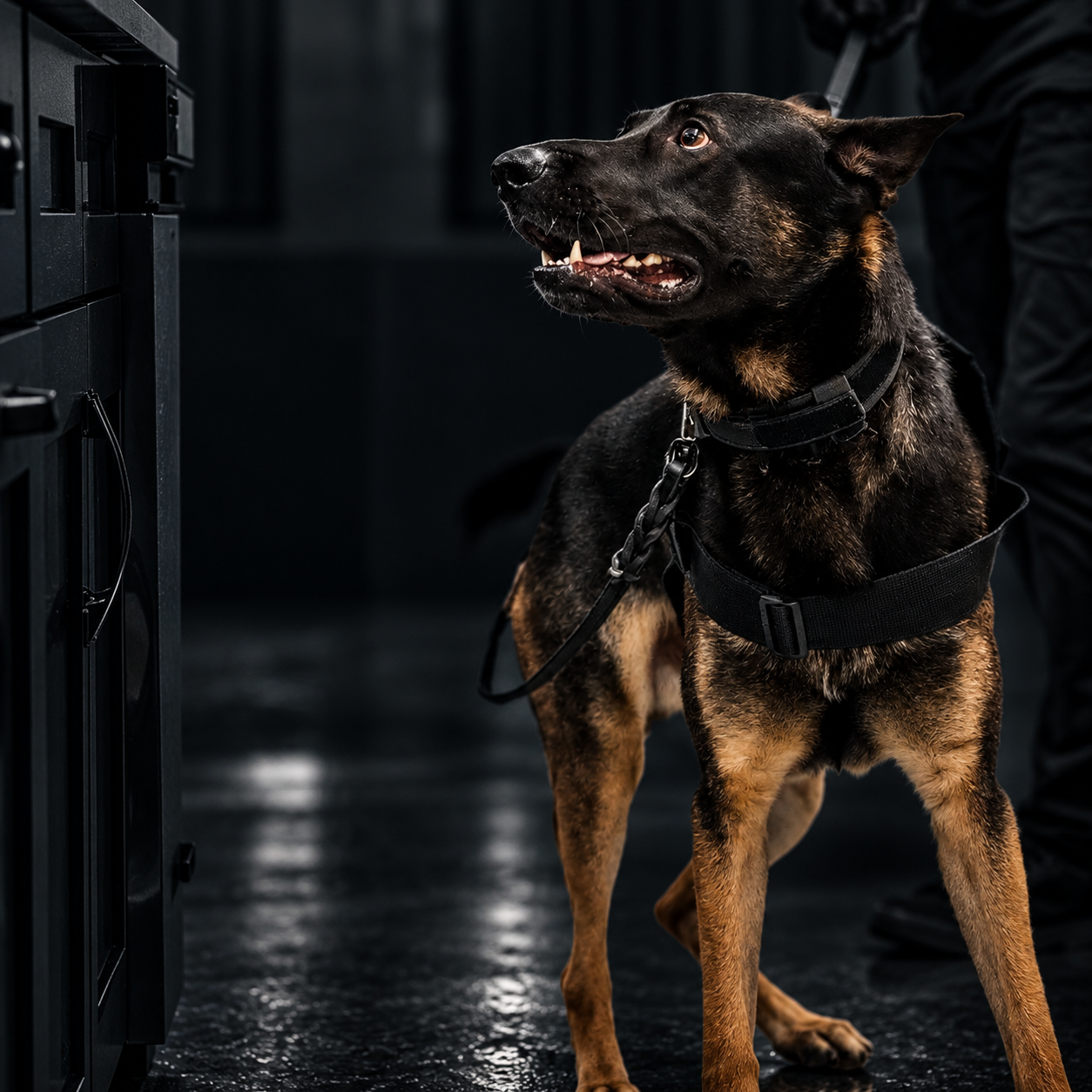
What a Mold Dog Can and Cannot Tell You
Mold detection is a harder scent problem than explosives or narcotics. Mold is hundreds of fungal species, and its odor shifts with the material it grows on, how wet it is and how old the damage is. A dog that works this well is doing something genuinely difficult — and it is still only half the job.
What the dog does
Indicates the location of active mold growth, including behind drywall, under flooring, inside cabinetry and in crawlspaces.
Covers an entire structure far faster than a point-by-point instrument survey.
Works without demolition, so nothing is opened until there is a reason to open it.
Finds sources that air sampling confirms exist but cannot locate.
What the dog does not do
Identify the species. No dog distinguishes Stachybotrys from ordinary household mold.
Measure how much is there, or how far it has spread inside the assembly.
Say anything about health risk or toxicity. That is a question for a qualified professional, not a canine.
Replace laboratory confirmation. An alert points; sampling proves.
Used properly, the dog is the fast, cheap, non-destructive first step that tells your inspector or remediation contractor where to aim the expensive tools. Anyone selling it as a replacement for testing is overselling it.
When to Bring In a Mold Detection Dog
Usually when you know something is wrong and cannot find it — or when you need to prove something is not there.
Persistent Odor, No Visible Source
The classic case. Something smells musty and nobody can find where it is coming from.
After a Leak or Water Event
Burst supply lines, roof leaks, appliance failures and flooding — checking whether drying actually worked.
Real Estate Transactions
Pre-purchase due diligence on a property with a water history, before the contingency period closes.
Tenant & Owner Disputes
A documented, independent inspection when a landlord and a tenant disagree about whether a problem exists.
Schools, Offices & Care Facilities
Occupant complaints in a building you cannot take apart room by room while people are using it.
Post-Remediation Verification
An independent check after remediation, alongside the clearance testing your contractor provides.
See the full list of industries we service.
How a Mold Detection Inspection Works
History and prep
We ask about the water history first — what leaked, when, what was done about it. Then a short prep list: HVAC and fans off ahead of time, windows closed, no air fresheners, ozone generators or strong cleaners beforehand. Each of those degrades the dog’s working conditions.
Work the structure
The handler works the dog room by room along walls, floor junctions, cabinetry, plumbing walls and access points. Nothing is opened and nothing is moved unnecessarily.
Mark and corroborate
Each alert location is marked and cross-checked against what the building is telling us — moisture readings, staining, plumbing runs and the known water history. An alert that lines up with a supply line is a very different finding from one that lines up with nothing.
Hand off for testing
Confirmation is a job for a qualified inspector or industrial hygienist with sampling and a laboratory. We give them precise locations so the sampling is targeted instead of scattered — which is usually where the savings show up.
Written report
Areas covered, alert locations, supporting observations and photos. Written so it is useful to a contractor, an adjuster or a court, and careful not to claim more than a dog can actually establish.
Mold Detection Dog FAQs
Can the dog tell me what kind of mold it is, or whether it is dangerous?
Do I still need an inspector or air testing?
Can a dog find mold behind a wall?
What should we do before the inspection?
Do you also do the remediation?
Can the report be used for insurance or a dispute?
What areas do you serve?
How much does a mold detection inspection cost?
Book a Mold Detection Inspection
Tell us the property, the square footage and the water history, and we’ll tell you whether a dog is the right first step — or whether you should start with testing instead.