Firearms Unit
Byers K9 Services
Nationwide Firearms Detection K9 Services
A concealed handgun does not announce itself. It moves through a door in a backpack, rides in a glovebox, sits in a locker. Byers K9 Services deploys firearms detection teams nationwide to find weapons, ammunition and firearms residue in schools, workplaces, venues and vehicles — on a schedule, or in response to a specific threat.
Point Blank Truth
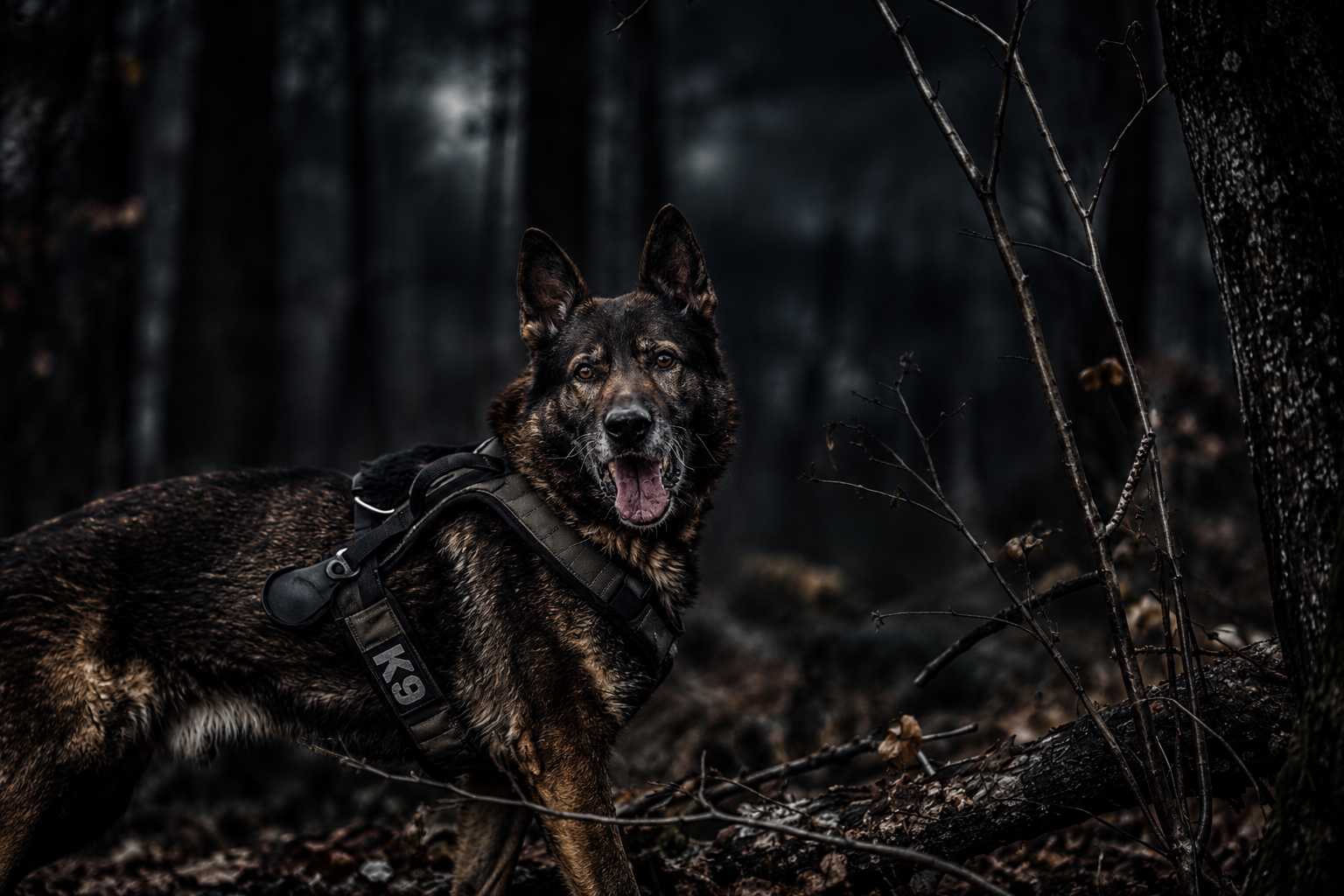
The FBI’s 2025 report found that nearly 68% of active shooter incidents involved planning and preparation, and those planned attacks accounted for 76% of all casualties. Planning takes time. Time is the only thing a detection program can actually use. A firearms detection K9 does not wait at a fixed checkpoint — it works bags, lockers, vehicles and common areas during that window, before anything starts.
Source: FBI, Active Shooter Incidents in the United States in 2025.
What Our Firearms Detection K9s Are Trained to Find
A firearms detection K9 is not trained on metal. It is trained on the odor complex that travels with a weapon — propellant, primer residue, solvents and packaging. That is why a dog finds things a scanner cannot.
Smokeless Powder
The nitrocellulose-based propellant in virtually all modern ammunition — present in loaded rounds, spent casings and residue.
Black Powder
Older propellant, muzzleloading supplies and reloading components.
Primer & Firing Residue
Deposited every time a round is fired. It lingers on hands, clothing, bags and vehicle interiors well after the fact.
Spent Casings & Brass
A single fired casing carries a strong, persistent signature long after the weapon itself has gone.
Solvents & Lubricants
Bore solvents and gun oils used on any maintained weapon, including one that has never been fired.
Loose Ammunition & Magazines
Frequently carried or stored separately from the weapon — and just as detectable.
Because the target is odor rather than the object, a K9 can indicate on a bag that once carried a firearm, a vehicle a weapon traveled in, or clothing worn at a range — with no weapon present at all. An alert is an investigative lead, not a finding. Every alert is resolved by a person, not by the dog.
Where Firearms Detection K9 Teams Are Deployed
Anywhere weapons are prohibited but access is open — and a queue of metal detectors isn’t practical.
Schools, Colleges & Campuses
Scheduled locker, classroom and parking-lot sweeps, plus response to a specific threat or tip. See our K9s For Students program.
Workplaces & Corporate Campuses
The largest active-shooter category in 2025. Entrances, lockers, break areas and employee parking.
Concerts, Festivals & Stadiums
Bag lines, perimeter screening and roaming coverage while doors are open.
Government & Public Facilities
Courthouses, municipal offices and civic centers — recurring sweeps and event-driven screening.
Houses of Worship
Pre-service sweeps and discreet coverage for congregations that don’t want a checkpoint at the door.
Vehicles, Lots & Fleet
Employee and student parking, rideshare lanes and fleet vehicles, where weapons are most often staged.
Terminations & High-Risk Events
Layoffs, hearings and disputes, alongside our security guards and patrol units.
Not sure where you fit? See the full list of industries we service.
How a Byers K9 Firearms Sweep Works
Plan and set the rules
We agree in advance on what gets searched, who is notified, and exactly what happens on an alert — before we arrive. For schools and employers, that plan is written down and approved by your counsel, not improvised in a hallway.
Sequence the areas
Lockers, common areas, vehicles and entry points are worked in an order that limits disruption and prevents a cleared area from being re-seeded behind us.
The search
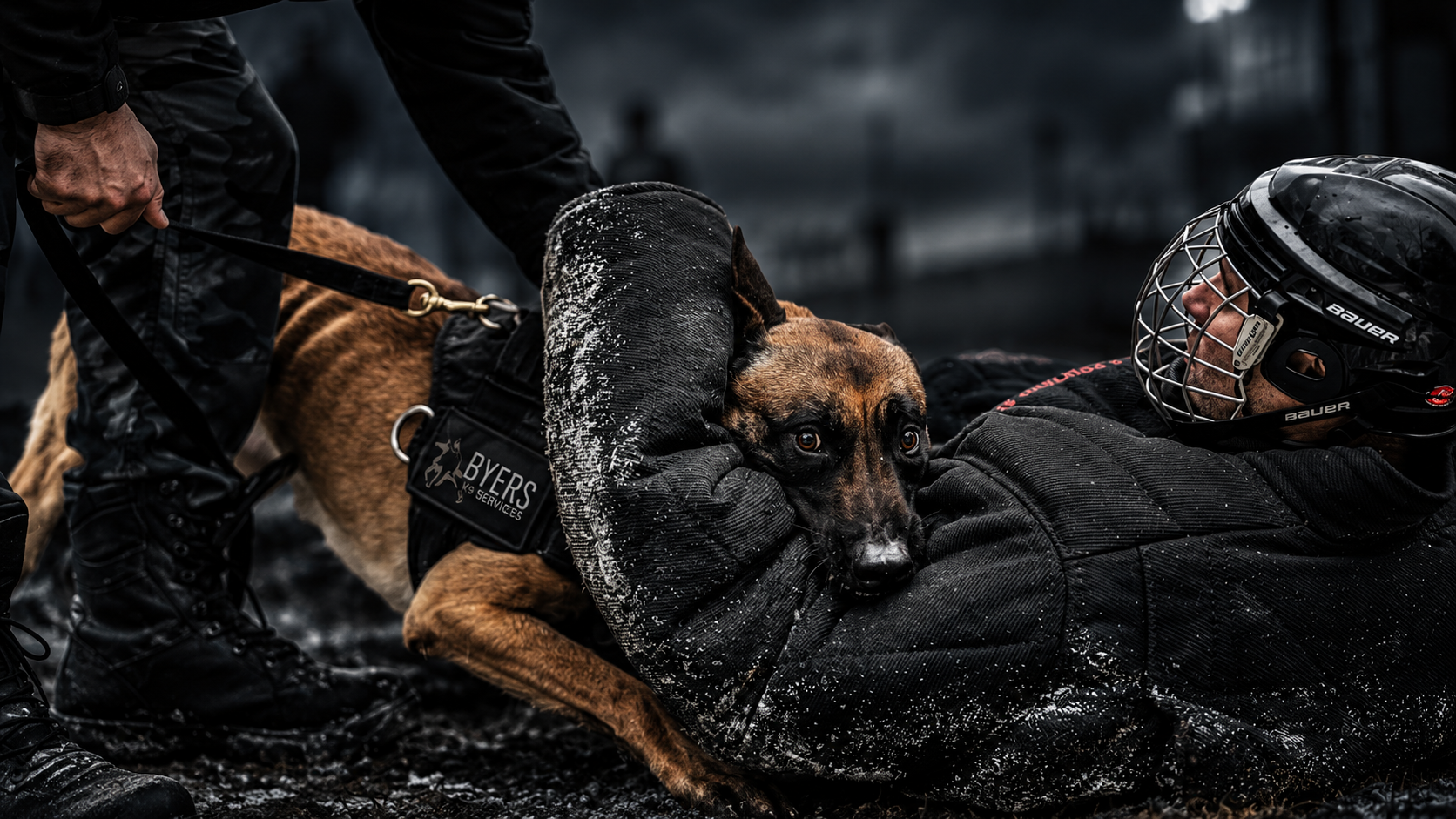
The handler works the K9 through each zone and reads the change in behavior. Our dogs use a passive alert — they sit or freeze on odor rather than scratching or pawing at a locker, a bag or a person.
Alert handling
We do not open bags, lockers or vehicles. On an alert we secure the area and hand off to your designated administrator or to law enforcement, per the plan agreed in step one. Detection is our role; the search and the decision are yours.
Documentation
A written report of areas covered, times, team identification, alerts and how each was resolved. For a school district or employer, that record is the part that matters six months later.
Training, Certification and Standards
Before you put any detection K9 into a school or a workplace — ours included — ask for three things:
1. Current certification
Which body certified the team (NNDDA, NAPWDA, NPCA, or a documented state or agency standard), the issue date, and the expiration. Detection certifications are typically valid for one year.
2. Maintenance training records
Logged, ongoing training across varied aids, quantities and hide placements, with blind or double-blind trials. Blind trials matter most here — they are what guards against a dog reading its handler instead of the odor.
3. A written alert protocol
In a school or workplace, what happens after an alert carries real legal weight. Get it in writing, reviewed by your counsel, before the first sweep — not after.
We hold our own teams to the same questions, and we provide documentation to every client on request.
Firearms Detection K9 FAQs
How is a firearms detection K9 different from a metal detector or weapons scanner?
Can a dog detect a firearm that has never been fired?
What happens when the dog alerts?
Can a K9 team screen people, not just objects?
Are the dogs safe around students, crowds and other animals?
Do you run sweeps during school hours?
What areas do you serve?
How much does a firearms detection K9 sweep cost?
Request a Firearms Detection K9 Team
Tell us the site, the schedule and what you need covered, and we’ll tell you what it takes to do it properly.